Baraka Roses

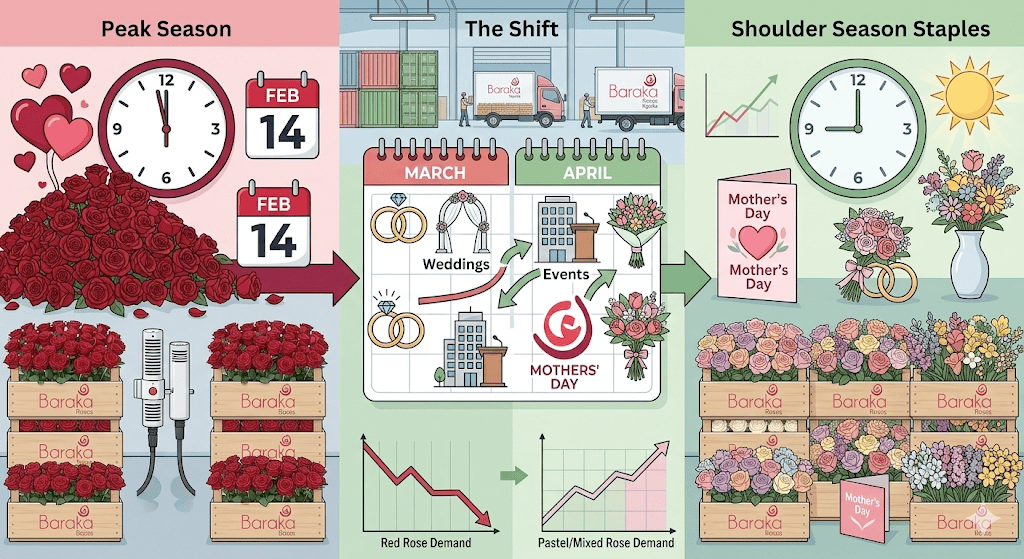
A detailed infographic-style multi-panel visualization of the post-Valentine floral market shift. It compares a massive pile of deep red roses and celebratory Valentine's icons from the FEB 14 peak with a highly organized post-harvest facility. A central calendar and graph illustrate the dramatic transition, showing red rose demand decreasing as the demand for diverse, pastel-colored wedding, corporate, and Mother’s Day varieties steadily rises. Neat, branded Baraka Roses Ngorika crates filled with mixed spring colors are featured prominently in the 'Shoulder Season' panel.

Post-Valentine Reality: What Happens to Flower Demand After Peak Season?

The dust has settled on February 14th. The frantic midnight deliveries are over, and the sea of red roses in your shop has finally cleared. For many in the floral industry, the weeks following Valentine’s Day can feel like a sudden silence after a grand symphony.

However, at Baraka Roses, we view this period not as a “slump,” but as a strategic pivot. While the global obsession with red roses temporarily dips, the demand for premium floriculture simply shifts its skin. For the savvy retailer and wholesaler, the post-Valentine reality is an opportunity to capture the lucrative “shoulder seasons” that define the rest of the year.

Here is how the market evolves and how you can prepare your inventory for the next wave of demand.
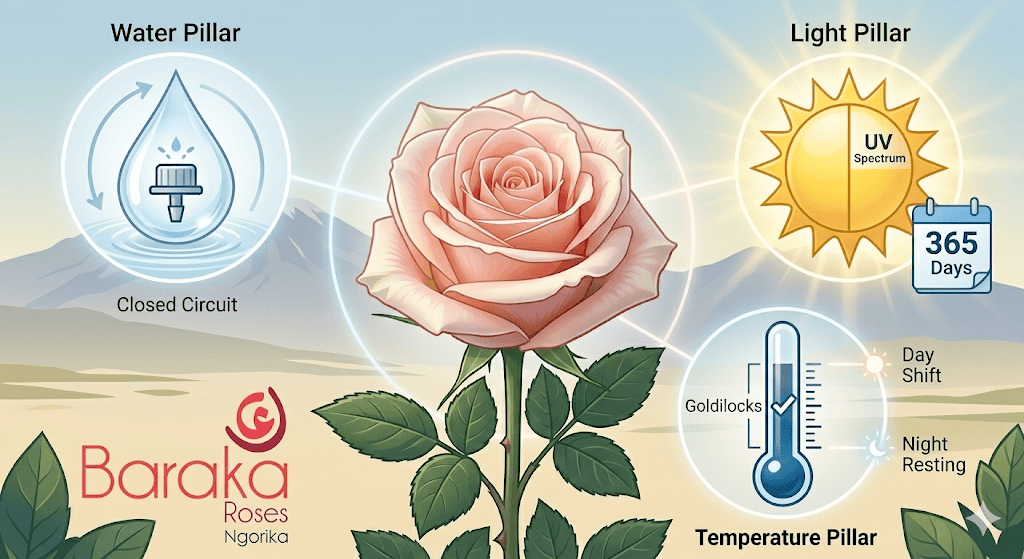
A stylized B2B infographic illustrating the three environmental pillars essential for perfect rose cultivation at high altitude. A central perfect pastel-pink rose is surrounded by glowing circular icons representing precision drip irrigation (Water), optimal UV spectrum natural sunlight (Light), and strict cold chain maintenance and climate control (Temperature). The entire composition is built in the clean, technical graphic aesthetic of image_0.png and image_1.png, anchored by the Baraka Roses Ngorika logo.

Water, Light, Temperature: The Three Pillars of Perfect Roses

To the casual observer, a rose is a miracle of nature. To the master grower, it is a masterpiece of environmental engineering. Behind the velvety petals of a Madam Red or the intricate bi-colour heart of an Esperance lies a delicate, disciplined balance of three fundamental elements.

At Our Farm in Ngorika, we have spent years perfecting the synergy between Water, Light, and Temperature. These are not just growing conditions; they are the three pillars that determine the head size, stem strength, and vase life of every Baraka rose.

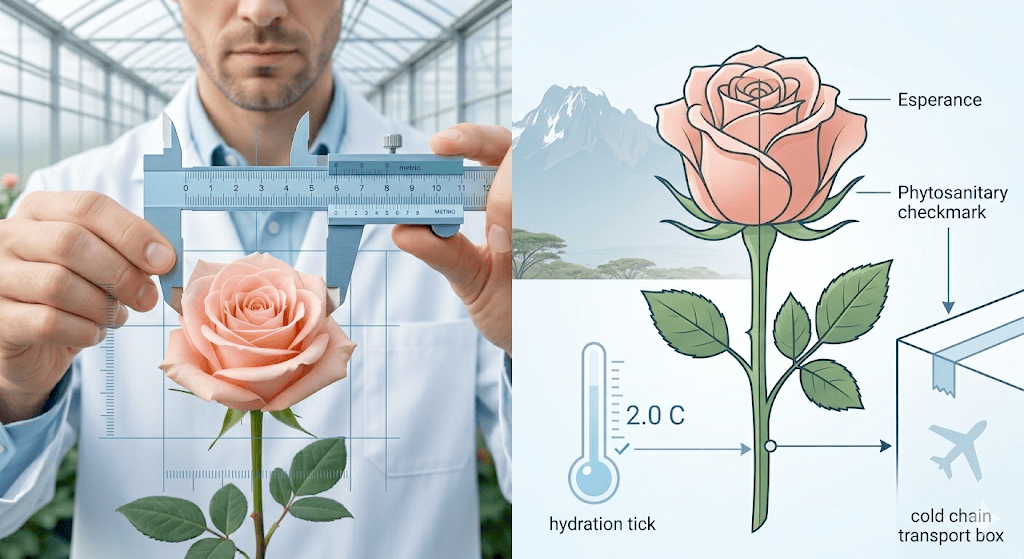
A technical B2B quality control scene featuring a specialist using a metal caliper to precisely measure the bud diameter of a premium rose. The image includes a detailed botanical diagram of a rose with technical annotations for hydration and phytosanitary checkmarks, alongside a cold chain transport box and a thermometer set to a strict 2.0°C benchmark.

What Makes a Rose Export-Ready? Inside the Standards Buyers Don’t See

To the end consumer, a rose is a symbol of beauty. To a global wholesaler or professional florist, a rose is a biological masterpiece that must survive a 6,000-mile journey without losing its integrity.

When you source from Baraka Roses, you aren’t just buying a flower; you are investing in a rigorous technical process. While the beauty is what sells, it is the unseen standards—the precision in grading, the chemistry of hydration, and the physics of the cold chain—that ensure your profit margins remain protected.

Here is what happens behind the greenhouse doors to make a rose truly “export-ready.”

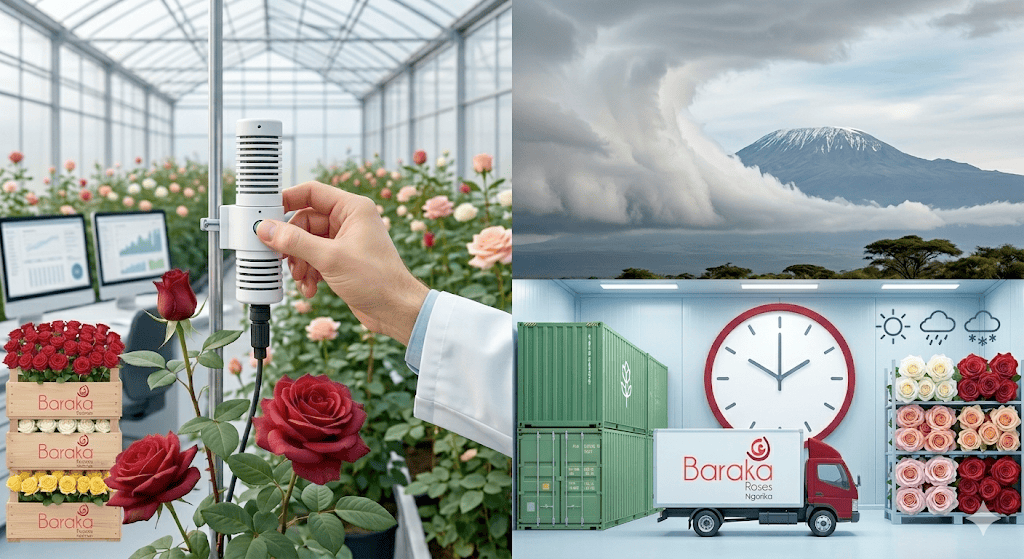
A professional multi-panel grid showcasing Baraka Roses' advanced supply chain: a laboratory-coated specialist adjusts a high-tech climate sensor in a sunlit rose greenhouse, a dramatic view of clouds over a mountain peak representing environmental monitoring, and a logistics bay featuring the Baraka Roses Ngorika logo on delivery trucks and stacked flower crates alongside shipping containers.

Forecasting Demand in Floriculture: How Farms Prepare for the Unexpected

In the global flower trade, time is the most expensive commodity. A single day’s delay in the cold chain can reduce a rose’s vase life by 10% to 15%. For wholesalers and retailers, the nightmare scenario isn’t just a late shipment—it’s the unpredictable “bullwhip effect” where small shifts in consumer demand lead to massive surpluses or catastrophic shortages at the farm level.

At Baraka Roses, we don’t just grow flowers; we manage a complex, data-driven ecosystem designed to absorb the shocks of a volatile global market. Here is how we use innovation and strategy to ensure that your supply remains consistent, even when the unexpected happens.

flower-green-wood-background-wild

Creating Corporate Floral Programs for International Women’s Day

In the modern corporate landscape, International Women’s Day (IWD) is more than just a social media post; it is a critical touchpoint for company culture. For HR teams and event planners, the challenge lies in moving beyond the performative and creating a tangible sense of appreciation that resonates throughout the office.

There is perhaps no more powerful—or universally appreciated—gesture than the gift of premium flowers. However, for a corporate setting, a “one-size-fits-all” approach rarely works. A successful corporate floral program requires a strategy that aligns with your brand identity and the physical layout of your workspace.

At Baraka Roses, we partner with organizations to provide the high-quality, sustainably grown foundation for these programs. Here is how to design an IWD floral strategy that makes a lasting professional impact.

Two business professionals in suits shaking hands over a contract and a box of premium Baraka Roses, with a cargo airplane being loaded with flower exports in the background at an airport tarmac.

The Unspoken Promise: Why Reliability is the Foundation of Floral Partnerships

In the global floriculture industry, “Valentine’s Day” isn’t just a date on a calendar; it is a high-stakes stress test for the entire supply chain. When a wholesaler in London or a florist in Dubai places an order for 20,000 premium red roses, they aren’t just buying flowers—they are buying a promise. They are trusting that their supplier can navigate logistical hurdles, weather fluctuations, and surging demand to deliver perfection on time.

At Baraka Roses, we understand that our business isn’t just about growing the world’s finest roses in the high-altitude sun of Kenya. It’s about being the partner you can depend on when the pressure is highest. Here is how we build long-term corporate relationships through the lens of peak-season reliability.

A lush bouquet of premium red roses with baby's breath and eucalyptus leaves, arranged in a woven basket on a rustic wooden table, set against a blurred background of a scenic Kenyan flower farm at sunrise.

If Roses Could Speak: The Silent Language of a Global Icon

Today is Valentine’s Day. Across the globe, millions of red, pink, and cream-colored blooms are changing hands, passing from grower to wholesaler, florist to lover. If these roses could speak—if the velvet petals and sturdy stems nurtured in the high-altitude sun of Nyandarua had a voice—what stories would they tell?

At Baraka Roses, we spend every day listening to them. We monitor their hydration, their opening stages, and the vibrancy of their hues. We know that a rose is never just a flower; it is a messenger. On this day of global celebration, the rose speaks a language that transcends borders, and its message is more profound than you might think.

beautiful-roses-bouquet-outdoors

More Than a Bouquet: The Global Language of the Valentine’s Rose

As February 14th approaches, a familiar transformation takes place across the globe. From the bustling flower markets of London to the high-end boutiques of Dubai, the air fills with the delicate, sweet fragrance of millions of roses. But while the red rose is the undisputed “Queen of Hearts,” the way it is celebrated varies beautifully from one culture to the next.

At Baraka Roses, nestled in the rich, high-altitude soil of Nyandarua, Kenya, we see this global phenomenon firsthand. Each year, we prepare millions of stems—from the deepest crimsons to the softest pastels—to fulfill a promise of love made in dozens of different languages.

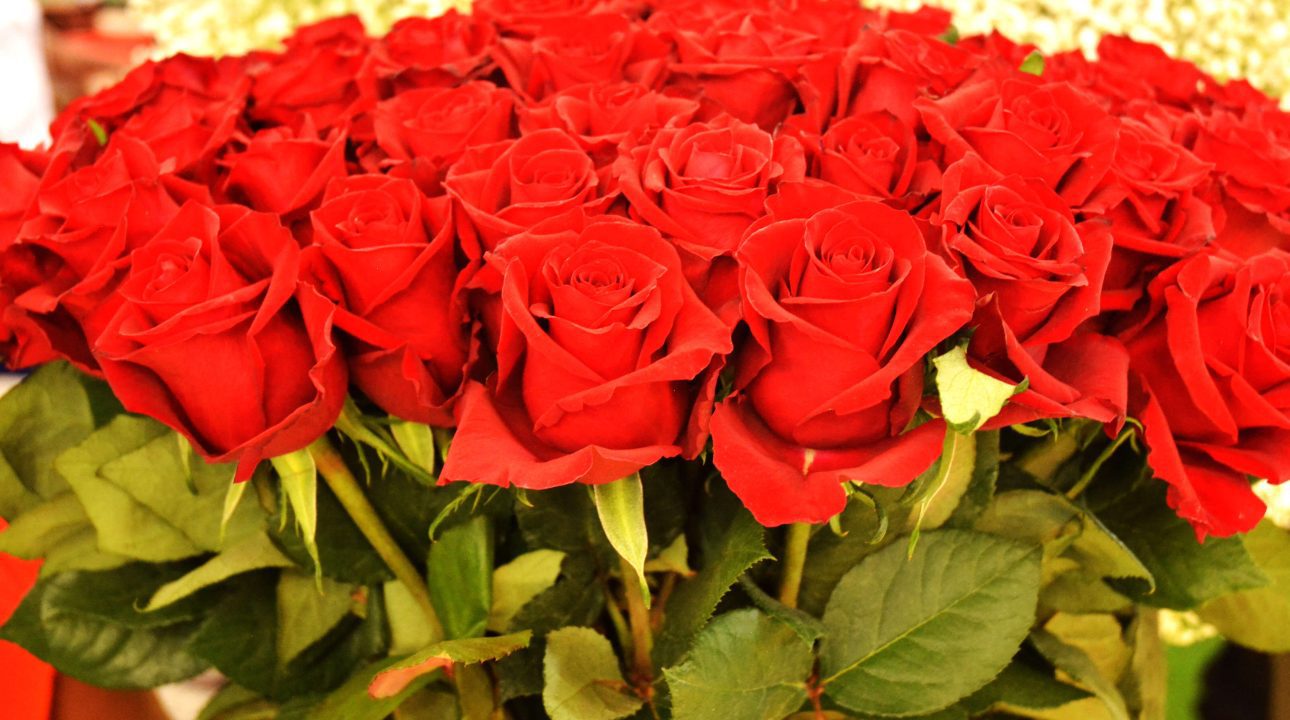
A bouquet of red roses by Baraka Roses Ngorika

From Classical Traditions to Modern Bouquets: How the Rose Became the Language of Love

Long before the first commercial flower auctions or global export routes, a single flower was already quietly conquering the human heart. Today, whether it is a single long-stemmed red rose or an extravagant bridal bouquet, the rose is the undisputed universal shorthand for “I love you.”

But why the rose? Out of thousands of botanical species, how did this particular bloom become the global titan of romance? At Baraka Roses, where we grow millions of these symbols of affection in the rich volcanic soil of Kenya, we believe the answer lies in a captivating blend of classical lore, recorded history, and sensory perfection.

Save water advertising ecology concept background with drop of water coming out of tap realistic vector illustration.

Water-Smart Floriculture: How Modern Farms Reduce Water Use Without Compromising Quality

In the world of premium floriculture, water is the lifeblood of every petal. For a rose to achieve its full potential—the kind characterized by a robust head size, vibrant hues, and a long-lasting vase life—it requires precise hydration. However, as global weather patterns become increasingly unpredictable, the industry’s challenge is clear: how do we grow the world’s finest roses while protecting our most precious natural resource?

At Baraka Roses, located in the high-altitude terrains of Nyandarua, Kenya, we believe that sustainability and quality are not mutually exclusive. In fact, they are deeply intertwined. By implementing “water-smart” technologies, modern farms are proving that you can reduce water consumption significantly while actually improving the health of the bloom.